Friday, April 18, 2014

Cells (S7L2)

Hello there again, and this post will be specifically on the standard S7L2 which is Ecology. Good luck and have fun with cells!!!

Standard S7L2:

Students will describe the structure and functions of cells, tissues, organs, and organ systems. 
Element A: 
Explain that cells take in nutrients in order to grow and divide and to make needed materials. 
Element B:
Relate cell structures to basic cell functions. 
Element C:
Explain that cells are organized into tissues, tissues into organs, organs into systems, and systems into organisms.
 
Element D:
Explain that tissues, organs, and organ systems, serve the needs cells have for oxygen, food and waste removal. 

Element E:

Explain the purpose of the major organ systems in the human body. 

Definition of cells- The smallest structural and functional unit of an organism, typically microscopic and consisting of cytoplasm and a nucleus enclosed in a membrane. Microscopic organisms typically consist of a single cell, which is either eukaryotic or prokaryotic.
Cells is also a very big unit that contains lots of elements that i had to cover in my 7th grade science year. It covers the 11 main organ systems, how organs, tissues, and organ systems serve the needs of the cells, grow and divide, how they are organized. If you don't know what any of these things are...your going to learn to day!

11 Main Organ Systems- Here is basically everything you need to know about the 12 systems!!
Circulatory system: pumping and channeling blood to and from the body and lungs with heart, blood and blood vessels.
 Integumentary system: skin, hair, fat, and nails.

  • Skeletal system: structural support and protection with bones, cartilage, ligaments and tendons.
  • Reproductive system: the sex organs, such as ovaries, fallopian tubes, uterus, vagina, mammary glands,testes, vas deferens, seminal vesicles and prostate
  • Digestive system: digestion and processing food with salivary glands, esophagus, stomach, liver, gallbladder,pancreas, intestines, rectum and anus.
  • Urinary system: kidneys, ureters, bladder and urethra involved in fluid balance, electrolyte balance and excretion of urine.
  • Respiratory system: the organs used for breathing, the pharynx, larynx, bronchi, lungs and diaphragm.
  • Endocrine system: communication within the body using hormones made by endocrine glands such as the hypothalamus, pituitary gland, pineal body or pineal gland, thyroid, parathyroid and adrenals, i.e., adrenal glands.
  • Lymphatic system: structures involved in the transfer of lymph between tissues and the blood stream; includes the lymph and the nodes and vessels. The lymphatic system includes functions including immune responses and development of antibodies.
  • Muscular system: allows for manipulation of the environment, provides locomotion, maintains posture, and produces heat. Includes skeletal muscles, smooth muscles and cardiac muscle.
  • Nervous system: collecting, transferring and processing information with brain, spinal cord and peripheral nervous system.
                                                    How is Serves Needs of Cells- 

So basically each system has a specific job to do to maintain the organism. Without the digestive system, we couldn't obtain nutrients from our food. Without the circulatory system, these nutrients would not be distributed throughout the body. Without the respiratory system, we would not get the oxygen necessary to "burn" glucose to obtain energy from the food brought to the cells by the circulatory system. The nervous system tells the body what's going on outside so our bodies can react. The excretory system regulates the osmotic status of the body, helping the circulatory system maintain water balance and so on and so on with every single organ system. They team up to serve the needs of the cells whether is oxygen, nutrients, blood or anything else that the cells need to like and do work they all help each other and they all serve the needs of the cell. And the organs help too because without the organs there would be no organ system, and without the tissues there would be no organs, so there would be no organ systems. So in general that's how it serves the needs of the cells. 
How they are organized- 
It is very simple, cells to tissues to organs to organ systems to organism 
                                                   Grow and Divide- 
There are many different sorts of cells but all have roughly the same cell cycle. However, the time taken to complete it can vary enormously. The cell cycle of a fly embryo cell takes just eight minutes while a human liver cell cycle can last longer than a year. Some cells can withdraw from the cell cycle and rest before re-entering it. Many cells in growing embryos often skip the resting stages altogether. Cells that have stopped dividing, like brain cells, never re-enter the cell cycle.
Mitosis- Mitosis is the process, in the cell cycle, by which a cell duplicates into two genetically alike (identical) daughter cells. In mitosis, chromosomes in the cell nucleus are separated into two identical sets of chromosomes, each in its own nucleus. In general, mitosis is followed immediately by cytokinesis, which divides the cytoplasm, organelles, and cell membrane, and later karyokinesis, which divides the nucleus, dividing cell into two containing roughly equal shares of these cellular components. Mitosis and cytokinesis together define the mitotic (M) phase of the cell cycle—the division of the mother cell into two daughter cells, genetically identical to each other and to their parent cell. This accounts for approximately 20% of the cell cycle.
Meiosis- Meiosis is a special type of cell division necessary for sexual reproduction in eukaryotes, such as animals, plants and fungi. The number of sets of chromosomes in the cell undergoing meiosis is reduced to half the original number, typically from two sets (diploid) to one set (haploid). The cells produced by meiosis are either gametes (the usual case in animals) or otherwise usually spores from which gametes are ultimately produced (the case in land plants). In many organisms, including all animals and land plants (but not some other groups such as fungi), gametes are called sperm in males and egg cells or ova in females. Since meiosis has halved the number of sets of chromosomes, when two gametes fuse during fertilization, the number of sets of chromosomes in the resulting zygote is restored to the original number.

Meiotic division occurs in two stages, meiosis I and meiosis II, dividing the cells once at each stage. The first stage begins with a diploid cell that has two copies of each type of chromosome, one from each the mother and father, called homologous chromosomes. All homologous chromosomes pair up and may exchange genetic material with each other in a process called crossing over. Each pair then separates as two haploid cells are formed, each with one chromosome from every homologous pair.
In the second stage, each chromosome splits into two, with each half, called a sister chromatid, being separated into two new cells, which are still haploid. This occurs in both of the haploid cells formed in meiosis I. Therefore from each original cell, four genetically distinct haploid cells are produced. These cells can mature into gametes.

That's basically it with this fun standard of cells!!! Have fun with this review, and remember, EVERYTHING IS MADE OF CELLS!!!


Copyrights: I got the videos from Youtube.com, and i got the pictures from google images, and some of the info from wiki.
-Andy Iyabor






Amphibians As An Indicator!!

Here is My Amphibian Walk!!!

Lab write: Using Amphibians as Indicators.

This Includes Standard: S7L4.c

Problem Question/Purpose:
I am investigating why there is a decrease in the frog population
If there is a decrease in the frog population, then there is probably a high level of pollution in their ecosystems.

The materials that I utilized to design and carry out my investigation were…
1. Pencil
2. Camera
3. Test Tubes
4. Forest Scenario
5. Frog logger
6. Nitrogen indicator tablet
7. 2 corks
8. Gloves                (2 pairs)

My procedures are…
1. After a rainy day go to a forest with a pond.
2.  Set up a frog logger in the pond.
3.  Wait for ten minutes.
4.  Play back vocalization.
5.  Make my observations.
6.  Put on one of my gloves.
7.  Take out one test tube.
8.  Fill up the test tube
9.  Place one nitrogen indicator tablet in the test tube.
10. Place a cork at the top of the filled test tube.
11. Turn the wrist with the closed test tube downwards and upright four times.
12. Wait for five minutes.
13. Check the color of the water.
14. Make my observations.
15. Put away used gloves and test tube.
16. Repeat directions 2-5.
17. Put on my other pair of gloves.
18. Take out the other test tube.
19. Repeat directions 8-15.
20. Take pictures


Observations
Before Cutting
After Cutting
Sounds you heard
You can hear more frog vocalization. There was a lot of rain on March 23 2002; the noise level was very high. There were a lot of frogs too.
Roots of trees act like filters. Roots gradually release water into the soil.
You can hear less frog vocalization. There was very little rain on March 25 2003, so the noise level was low. I heard frogs too, but there was few.
There are no roots to hold soil.
Nitrogen Concentration
The color sample was in-between low and medium. Low nitrate concentrations. So there were lots of frogs living in the pool. And there was very little infection going on in the pond without the frogs noticing.
The color sample was high. This means there were high nitrate concentrations. So this proves that there was lots of chemicals and poop in the pond (high nitrogen concentrations) which makes the frogs get infected and die.

Conclusion:
My hypothesis stated that if there is a decrease in frogs then there is a high level of pollution in their ecosystems. I used a virtual simulation to prove my hypothesis. After completing the lab I have seen that the vocalization of an ecosystem depends on how many healthy frogs there are, and that the roots of trees really help the ecosystem. My observations suggest that nitrate levels could help frogs for better or maybe for worse. This means that vocalization depends on the amount of frogs which depends on the nitrate levels.
In conclusion, my hypothesis was mostly correct because with high nitrate levels and a decrease in frogs. I learned that with trees there are less polluted runoff and nitrogen going into the ecosystem. This ends up with more healthy and better frogs. Without trees there would be a lot of runoff and nitrogen going into the ponds, which would kill them. Therefore there are increasing nitrate levels and a decreasing chance for frogs to live.
This lab is connected to what I learned in class because in science this year we are learning how the quality of ecosystems affects life in the ecosystems. 

-Andy Iyabor

Charles Darwin


Here is the man that created his theory of evolution!

This covers standards: S7L5


Charles Robert Darwin, was an English naturalist and geologist, best known for his contributions to evolutionary theory. He established that all species of life have descended over time from common ancestors, and in a joint publication with Alfred Russel Wallace introduced his scientific theory that this branching pattern of evolution resulted from a process that he called natural selection, in which the struggle for existence has a similar effect to the artificial selection involved in selective breeding.
Darwin published his theory of evolution with compelling evidence in his 1859 book On the Origin of Species, overcoming scientific rejection of earlier concepts of transmutation of species. By the 1870s the scientific community and much of the general public had accepted evolution as a fact. However, many favoured competing explanations and it was not until the emergence of the modern evolutionary synthesis from the 1930s to the 1950s that a broad consensus developed in which natural selection was the basic mechanism of evolution. In modified form, Darwin's scientific discovery is the unifying theory of the life sciences, explaining the diversity of life.

-Andy Iyabor 

Thursday, April 17, 2014

Fish Biome Story!!!

Here is my Fish Biome Story Everyone!!!

This deals with standards: S7L4.c and S7L4.d and S7L4.e 


Biome: Marine Ecosystem, Aquatic Biome    (Under the sea)          

(A children story for 5 and under)   (A non- informational story)      (Approved by the Gov.)

There once lived a beautiful orange clown fish under the sea. His name was Bob. He was a consumer. He has a friend named Jill who is a tall dark green seaweed. And a medium sized flatfish named Marvin. Jill is a producer, and Marvin is a decomposer. Bob also has another friend, but he doesn’t like to talk about him much. He is a scavenger! His name is Mike and he is a tiny orange shrimp.
Here at the biggest aquatic community you can see lots of beautiful things like coral reefs, the refreshing and cleansing water, but most importantly the beautiful diversity of the animals and the colorful sensation of lots of swimming fishes. You can also see things like Bob, Jill, Marvin, and Mike. In fact they all have a secret with Mr. Cool Shady Sun! They are related!
I don’t mean cousins, they are all related because they all have a niche, and they depend on each other. Even sensitive boring Mike and he’s the lazy one! In the pretty water Mr. Cool Shady Sun gives Jill a superpower that only he can do! He makes food! So when he makes the food he uses 90% of it all for his self because he is selfish and stingy. Then Bob comes along and eats Jill, and take the 10% of the energy. Don’t worry he grows back. Then Marvin really gets into it! He comes in and how you say… breaks it down. Lastly Mike eats the how you say again… poop. But kids, even though that it’s gross, that’s just life under the sea. (It’s called mutualism, they are all happy and they all get something out of it.) (They benefit) (It’s also cooperation because they all work together for one goal.)
But that’s not all what goes on around the refreshing colorful sea! Sometimes they fight! You are kids so just call it competition. Another fish named Steve was talking trash about Bob. Saying he was like a tick on a human. (Parasitism) So they decided to wrestle to see who was stronger. The winner gets to eat Jill. So they wrestled. And it wasn’t pretty! Fish blood everywhere guts flying, and other fish chanting! Man! It was a showdown! But after the fight Bob was the one that ate Jill. And Steve died. Sorry kids you missed the fish funeral.
Enough about boring old dark skinned Steve! Let me tell you this one story where Bob goes and hunts down his prey! It was a nice Monday morning. Jill had just grown back. And bob had just woken up. Fish say that his eyes turned red as he saw the medium sized blue fish, but other say that he was so excited that he almost forgot to eliminate the salt from the water he was about to drink, or forgot to keep his body temperature constant.(An adaptation that he can do) But he did what any predator would do. Swim very lightly and carefully so the fish wouldn’t swim away. After Bob got super close, he opened his big messed mouth and the next thing you know! Gobble gobble! No more fishy! It was so awesome and Bob was so proud of being a predator that he bought himself and big light blue expensive trophy from fish mart. It was a girl’s trophy because it had the big words you go girl on it, but Bob just scratched out girl and put boy. A little bit strange and weird of him, right…
Bob is pretty weird sometimes. But when you think about it, is it really Bob being weird or is it Jill, Marvin, and Mike being weird??? Maybe not… to Jill, Marvin, and Mike he seems weird maybe because he’s different. Think about it… Bob has rounded fins for running away from predators, stimulus to help detect host species, and bleaches itself to blend in! Is that weird? OR IS IT WRIRD FOR Jill? Think about it some more… Jill has strong fronds to prevent from snapping, he has a waxy outer cuticle that protects it from small creatures, he does gelatinous polycharrides that help retain water, and releases gametes into the sea to reproduce. Is Jill weird??? But could it could be Mike? Because he adapts to warm temperature, sits at the bottom of the ocean in winter, finds cover behind stone in fast moving water, jumps away in the water to avoid predators, and reproduces a lot! Is that weird to you? Or is it weird to Marvin? All he does is just use camouflage to hide from predators. Or is it us! We sweat when were hot to get cold!!! That’s probably weird for Bob, Marvin, Jill, and Mike!  So maybe were the weird ones!
But don’t be sad children, because I’ m about to tell you this awesome story of when Marvin thought he was a small ugly barnacle in his dream. He says that he was always clinging onto his big blue pal The Whale for protection and comfort. Even though the whale didn’t get anything back. (Commensalism) So this one day The Whale went deep undersea where it was dark, mysterious, and dangerous and gave birth to a human that could breathe underwater!( It’s just a dream kids!) Now, when the 5 foot 2 human was born he got a very terrible skin disease. I think Marvin said that it was parasitism but I’m pretty sure that he got it from a tick! But anyway when he got bit, he turned into a huge gold fire breathing cyborg! And fought crime under sea, eat lunch with the president of sea world, and eat candy every day!

Now didn’t that cheer you up! (Kids respond: YES!) Okay well see you next time!

THE END!

-Andy Iyabor 

Organelle Story!!!

Here is my Organelle Story everyone!!!

This goes with standard: S7L2

Theme:  Mall                                                                                                                                       
Characters:
Cell: Mall   
Nucleus: mall
manager       
Mitochondria: food court    
Cell membrane: doors   

Cytoplasm: security guards        
lysosomes: shopper      
Golgi bodies: sale papers 
E.R: shopping cart
Ribosome: food in food court      
Vacuole: water fountains        
Chloroplast: Solar panels
Cell wall= Walls 


Nucleus: Hello everyone I have something very important to share.
E.R: Go ahead nucleus
Nucleus: Okay, someone in this room has upset lysosome.
Everyone: WHAT!!!
E.R: I blame vacuole!
Vacuole: Well I blame E.R!
Nucleus: Calm down the two of you!! E.R explain…
E.R: Well I blame his because his water is hot and dirty!
Vacuole: Well I blame him because his wheels squeak too much!
Nucleus: okay, settle down. So we have 2 suspects. Any eles???
Cytoplasm: I do! I blame ribosomes because his food is dry and stale!
Ribosomes: Why me? It should be you because all you do is just sit on your lazy butt and eat my doughnuts!
Nucleus: Is this true cytoplasm?
Cytoplasm: Yes sir…
Nucleus: You’re fired!! Leave this cell immediately!!!
Cytoplasm: Thanks a lot ribosomes!
Ribosomes: Don’t mess with the rib boy!!!!
(And he leaves)
Nucleus: Leave now and don’t say another word!!!... Okay back to our topic, ribosomes you’re off the hook for now.
Mitochondria: I would like to butt in here and say that if ribosomes is off the hook then shouldn’t I be too. And also my homeboy cell wall because he’s just the wall. And my main man chloroplast because he’s just a tiny solar panel! Oh yea and also cell membrane because he’s a door.
Nucleus: Thank you mitochondria. Your homeboy you and your main man are off the hook too.
Chloroplast, cell membrane and cell wall: Thanks mitochondria!
Nucleus: Okay were loosing customers so I’m going to need everyone that was off the hook to go work.
Golgi body: Wait wait wait… Why do you get to be in charge! I want to be in charge!! Golgi body! Golgi body!  Golgi body!
Nucleus: Stop it and you’re fired!!!! Please get out of his room and this cell without you saying a word!!
(And he left)
Nucleus: Okay well…
Lysosomes: UM EXCUSE ME INSTEAD OF TRYING TO FIGURE OUT WHO DID IT YOU COULD JUST ASK ME!
Nucleus: Oh, sorry go ahead
Lysosomes: Okay, well the person who did it was!!!!! 
(A VERY VERY VERY VERY 5 HOUR LONG PAUSE)
Everyone: Get on with it!!
Lysosomes: Oh yea… it was the security guard!! But you already fired him so…
Nucleus: Okay so were done!!! Everyone who’s still hired gets a raise and let’s take a lunch break!!!  Now get out so I can be alone!

-Andy Iyabor

All About Gregor Mendel!!!

Here is all about Gregor Mendel!!!
Standards:
- S7L3.a and S7L3.c


Gregor Johann Mendel was a German-speaking Silesian scientist and Augustinian friar who gained posthumous fame as the founder of the modern science of genetics. Though farmers had known for centuries that crossbreeding of animals and plants could favor certain desirable traits, Mendel's pea plant experiments conducted between 1856 and 1863 established many of the rules of heredity, now referred to as the laws of Mendelian inheritance.
Mendel worked with seven characteristics of pea plants: plant height, pod shape and color, seed shape and color, and flower position and color. With seed color, he showed that when a yellow pea and a green pea were bred together their offspring plant was always yellow. However, in the next generation of plants, the green peas reappeared at a ratio of 1:3. To explain this phenomenon, Mendel coined the terms “recessive” and “dominant” in reference to certain traits. (In the preceding example, green peas are recessive and yellow peas are dominant.) He published his work in 1866, demonstrating the actions of invisible “factors”—now called genes—in providing for visible traits in predictable ways.
The profound significance of Mendel's work was not recognized until the turn of the 20th century (more than three decades later) with the independent rediscovery of these laws. Erich von Tschermak, Hugo de Vries, Carl Correns, and William Jasper Spillmanindependently verified several of Mendel's experimental findings, ushering in the modern age of genetics.

Copyrights: From Wikipedia...

-Andy Iyabor


CYCLE RAP SONG!!

Here is my Nitrogen, Carbon, and Water Cycle Rap!!!

This goes for standard:
- S7L4.a and S7L4.b 


Song for Black and Yellow
(Remix for the 3 main cycles)

By: Andy Iyabor
Yea, uh huh, you know what it is!

Chorus: Water cycle, Nitro cycle, carbon cycle, all these cycles!

Yea uh huh, you know what it is!

(Chorus)!

Verse 1 Water cycle: Yea, uh huh, you know what it is!

Six important processes, will do like this!

Yea, uh huh, screaming that cycle!

When it goes round and round!  That’s cycling!

Reppin’ the oceans when you see me you know everything!

(Chorus)!

I see it down from the leaves from the plants in in!

(Chorus)!

Verse 2 Nitrogen Cycle: Heads Up, Nitrogen!

It’s found all through the biosphere!

It makes 75% of the atmosphere!

Every organism need to have some nitrogen!

Animals eat plants, and be like yea, yah!

It’s really harsh but you know how life is!

Carbon got 3 main areas, but they all sound the same so you better be careful (Sing Fast)!

Nitrogen Fixation, Ammonification, denitrification (Sing Fast)!

Just call me crazy but bacteria converts it to ammonium!

Plants provide sugars produced by photosynthesis!

No2…. And No3!

Yea, uh huh, you know what it is!

Bacteria in soil converts it to ammonium!

Yea, uh huh, screaming that cycle!

When the cycle starts to go! NO STOPIN!

Reppin’ the plants when you see me you know everything!

(Chorus)!

I see it down from the soil to the plants within!

(Chorus)!

Verse 3 Carbon: Got a call from my mother nature this just in!

Combustions awesome because it’s the process of burning substances!

Not hu—mans, but just the dead ones!

This isn’t for 1 night its going everyday bro!

I’m breathing oxygen! And out co2!

Combustion of organic matter releases carbon into the atmosphere!

Got plant filled with co2!

Throw it up, just trying to help the help the carbon cycle GO!

CARBON!!!!!!!

Yea, uh huh, you know what it is!

Everything I say I say it big!

Yea, uh huh, you know what it is!

When it goes in the air, that’s fresh!

Reppin carbon when you see me you know everything!

(Chorus)!

I see it down from the plants to the atmosphere!

(Chorus)!

Verse 4 Water again: Go down like how you supposed to do!

Infiltration underneath the ground!

It soaks up water too!

And the water goes filtered out!

Infiltrates and filtering!

Some water goes through the leaves!

And the stems transpiration you call that transpire!

The water goes high every morning we feel that!

You check out the drop fills! 100%! Ep-I!   Der!   Mis!   (Epidermis)!

(Silence)

Yea, uh huh, u know what it is!

Background: (You already know what it is so you should by now!)

Reppin’ the oceans when you see me you know all the cycles!

(Chorus)!

I see it down from the leaves from the plants with in!

(Chorus)!

Yea, uh huh, you know what it is!

Bacteria in the soil converts it to ammonium!

Yea, uh huh, screaming nitro cycle!

When the cycle starts to go! NO STOPING!

Reppin’ the plants when you see me you know everything!


(Chorus)!      I see it down from the soil to the plants within!!!  (Chorus)!

Beat:
                            www.youtube.com/watch?v=rS0Ua-j6faI
Background music: www.youtube.com/watch?v=rS0Ua-j6faI

- Andy Iyabor

WHY I HATE GENETIC ENGINEERING!!!

I really don't like Genetic Engineering and here is A LOT of reasons why!!!

This covers Standard:
S7L3.c and S7L4.c

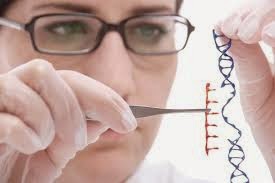
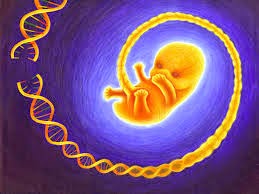
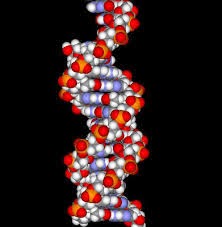
 In my personal opinion genetic engineering is the most disgusting thing I have ever seen. What they do to the animals, and with their genes doesn’t seem right. Some people might say bigger meat, better food, and more food. But it doesn’t seem right. Even if you get all those things, lots of other bad things would happen too. It’s not that it’s gross that makes me believe that it’s bad, it’s the outcome of the mixing up of traits. There basically just messing around with animals and their genes! There just trying to make an easy buck or just go crazy and see how far this “Genetic Engineering” can go. Next thing you know they’re going to start to test it on people, then they start making humans larger without steroids, then they make wings for humans to fly, then they might just go absolutely crazy and start to make humans glow in the dark! These scientists have all the info and brains to do anything with mixing up traits! And some don’t know when to stop! And I can guaranteed you, it’s not going to stop at animals!

                Another reason why I think that GE is crazy, is because of the health risk and issues. Genetically engineered foods have caused the deaths of thirty seven people and caused 1,500 to be partially paralyzed. 5,000 more people were temporarily disabled by a syndrome that was finally linked to Tryptophan made by genetically engineered bacteria! (AKA: GE CAUSES DEATH!!) Also Arpad Pusztai, a former Scotland Rowett Research Institute researcher and world's leading lections and plant genetic modification expert did his research and found out that rats (his test subjects) fed on the GM potatoes, and now the rats have smaller livers, hearts, testicles and brains, damaged immune systems, and showed structural changes in their white blood cells making them more vulnerable to infection and disease compared to other rats fed non-GMO potatoes. All of that happened to the rats who fed on the GM potatoes! Now imagine if those same potatoes went into the market. This food isn’t good! This food kills humans and animals on the inside and we don’t even know it! This is only my 1st reason why I think this GE stuff and messing around with traits is a bad idea! Someone could get hurt! And it could be us!


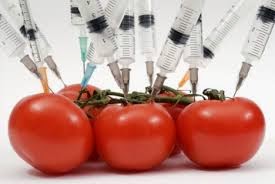
               Another reason why I think that GE is insane, is because of the crops. For example, an engineered gene may cause a GE crop (or a wild relative of that crop) to become invasive or toxic to wildlife. When this happens most or all of your crops near the GE is crop is either harmed or destroyed. Think about it, if you were a farmer and you wanted a GE crop that grows faster than all the other crops in your field, you would be only focusing on money and how fast you get it. You wouldn’t even think off all the chemicals and weird things going on in that specific GE crop. So you place it in the middle of all your crops. Chances are, in a few weeks your crops would all be damaged because of that crop! This has happened to a lot of farmers all over the US! And when they place the GE crops lots of bad things happen to the crops and us too. Maybe a normal crop was next to the GE one, and it was infected with some disease that wasn’t obvious to the farmer. When the farmer eats it or tries to sell it. Bad things will start to the farmer or the person that bought it. This also goes with my 1st reason the health risk. If the diseased crop and the GE crop goes out into the public and goes into the market, people would eat it and not even know it was a GE crop! Even though it might not even go out into the public, it could still affect many other crops and humans when they eat it. You never know, some GE crops could be fatal. When they mix up genes and traits you’re not really sure whether sure it’s safe. Like in the video when they put a jellyfish trait (glowing green in dark) into a rabbit. You might not even know if it’s safe to eat because of all the weird traits and chromosomes and genes inside in it. You might not even know if it was a GE rabbit! This is my 2nd reason why I think GE foods and GE
animals and testing are not right.


                My 3rd reason why GE is a terrible idea is because it’s unethical and it causes ethical problems. Some of these problems include cloning. The first type of cloning was exhibited by Dolly in 1996. The death of Dolly in 2003 posed many questions about the safety of genetic engineering and cloning. There are many questions but no answers. There are also some social questions on the internet about ethical problems with GE for ex. Who will have access to these technologies and how will scarce resources—such as medical advances and novel treatments—be allocated? (For all the consumers know crazy people in crazy labs could be doing crazy things and creating crazy things and trying to pass them off as normal and good for you! If Hitler got his hands on this technology and this info he could be making animals blow up and using them as weapons and other crazy things! All you need is the materials, the mind and the craziness in you to do all sorts of things with this! There are a lot more questions that are on websites and everywhere, but no answers, and if there are answers, are they lies or the truth? If you don’t know what really happens in these labs or farms, then why trust them with your food? Don’t take the risk of GE foods!


                 My 4th reason why I think GE is a bad idea is because many scientists and people don’t know where and when to stop with this GE idea. Genetically engineering is new and nobody knows how far it can go. You can mix traits up and clone and all other kinds of things. There are a lot of animals on this planet, so that’s a lot of animals you can test on, and that’s a lot of traits you can mix up. Also scientists are finding newer species and newer animals. This GE can go out of hand and next thing you know, countries will be fighting and seeing who can take it to the “final level.” If it’ possible they will always find a way. Some scientists can just go so crazy over this new technology the limits are impossible. They will probably try to get the traits and genes from extinct animals and put them in us or animals. Or go to a planet and kidnap aliens and steal their traits and put them into us or animals. There trying to change everything about us and animals! They figured out how to get to the moon, they figured out lots of other things. So they can probably find lots of other crazy ideas to put into humans and animals and more. This is my 4th reason why I don’t like the sound of GE foods and animals. 


 My 5th and last reason why I don’t like GE is because poor animals die in experiments, or just come out deformed and looking crazy like a 2 headed frog or a mice with 4 antennas. These scientists should care about these poor little animals that die mostly 95% of the time with their silly little experiments. It’s getting way out of hand and it’s not going to stop at just animals. They are already doing it on humans. When the humans die or get deformed, maybe they will understand that this is a bad idea and it’s going to blow up in their faces. My 5th reason is caring for the animals that are tested and come out deformed and looking crazy. They die left and right and some scientists swear that they aren’t doing it for money, they promise they are doing it for the animals. Like on the video, with the chickens. In my opinion the chickens looked ugly without their feathers. And they said they did it because it’s hot and no chicken would want feathers in the summer time, but they are actually doing it so they don’t have to do the extra work. So they obviously don’t care about the animals because cloning is a fail and lots of animals die or get deformed in the process. So this is my 5th and last reason why I think that cloning and GE is a silly and bad idea.


              In conclusion I think that GE is a terrible and disgusting thing. What they are doing to the animals as test subjects aren’t right. (Just because we can mess around and play with traits doesn’t mean we should. Just because they made cigarettes for smoking doesn’t mean we should do it. Just because we have free speech doesn’t mean we can talk while a teacher is talking.) The whole idea of it is just wrong and plain messed up. The way they use cows, fish, and rabbits in the video is just disgusting. The cows look like a mini King Kong, the fish look like they are talking drugs, and rabbits just glow in the dark so when a predator comes they die easily! Some GE can look fun and cool but it’s really not. My 5 reasons explain why I think GE is wrong and bad and I think that they are very good reasons on why GE is bad. 

-Andy Iyabor 


Ecology (S7L4)

Hello there again, and this post will be specifically on the standard S7L4 which is Ecology. Good luck and have fun with ecology!!!

Standard S7L4:
Students will examine the dependence of organisms on one another and their environments.
Element A:

Demonstrate in a food web that matter is transferred from one organism to another and can recycle between organisms and their environments.
Element B:
Explain in a food web that sunlight is the source of energy and that this energy moves from organism to organism.
Element C:
Recognize that changes in environmental conditions can affect the survival of both individuals and entire species.
Element D:
Categorize relationships between organisms that are competitive or mutually beneficial.
Element E:
Describe the characteristics of Earths major terrestial biomes.
Definition of Ecology- The branch of biology that deals with the relations of organisms to one another and to their physical surroundings.
Ecology is and was the 1st unit/standard I learned in my 7th grade science class. And i have to say it was pretty much the biggest one when you think about it. We learned about the biomes, food webs, symbiosis, and ecological footprints. Now i know what your thinking if you never studied ecology, WHAT IS THIS!?!? Well i will break it down for you right NOW.

Biomes- Biomes are climatically and geographically defined as contiguous areas with similar climatic conditions on the Earth, such as communities of plants, animals, and soil organisms, and are often referred to as ecosystems. There are 7 major biomes in the world, and those biomes are temperate deciduous forest, savanna, grassland, taiga, tropical rain forest, desert, tundra, and rain forest. These biomes can also be classified by temperature, vegetation, and rainfall (precipitation) So those 3 things determine what biome your in. For example, if the temperature was like -100 degrees Fahrenheit then obviously the biome would be tundra or taiga or something very cold. Or if it was like 100,000 degrees then it would probably be a desert or something VERY hot. Even though that the temperature would never be that, it was just an example to show that those 3 things determine what biome it is. And its not only those 3 things, there are many more!!!

Food Webs- A food web depicts feeding connections in an ecological community and hence is also referred to as a consumer-resource system. They basically just display/tell you which organism eats what in an ecosystem. (So you can't make a food web with a dolphin a whale and then a fox, that wouldn't be right!) In the food web, there are producers such as plants and algae. The producer basically makes the food for the ecosystem, only producers can make their own food! Its just like in a classroom, there is the smart kid and the not smart kid. The ecosystem is represented by the classroom, and the smart kid (producer) is producing the answers for himself and for his classmates do they can all get A's on the test. (Pretty simple) Then there are 1st consumers and 2nd consumers and 3rd and so on and so on. The 1st consumer eats the producer to get the food and the energy and the 2nd consumer eats the 1st consumer, and the 3rd consumer eats the 2nd consumer. So its basically just like cheating on a test, the producer gets cheated off of by the 1st consumer, then the 2nd consumer cheats off of the 1st consumer, and so on and so on! And that's just the basics of food webs. (Also another note: Some 2nd consumers can also eat producers and if that is the base it will be easily shown on the food web. And also, 1st consumers are most likely bigger than producers and so on and so on 99% of the time) Also there is also something called a 10% rule its really easy. The producer makes the food and energy, so it gets 100% of it. Then the 1st consumer only gets 10% of the 100% the producer got. Then the 2nd consumer gets 10% of what the 1st consumer got. These numbers get lower and lower very quickly! Its not a lot, but it's still live-able. And that's the 10% rule! Hope it wasn't too much! 
 Use the link to play a food web game!
http://teacher.scholastic.com/activities/explorer/ecosystems/be_an_explorer/map/line_experiment14.swf

Symbiosis- Symbiosis is close and often long-term interaction between two or more different biological species. So its basically a relationship that occurs between 2 animals. There are basically 3 types of relationships, The three types are: Parasitism, one organism is harmed wile the other is benefited. Mutualism, both benefit. Commensalism, one is benefited the other is not harmed or benefited. That's basically what they are. And now I will show you some examples.
Mutualism:
- The oxpecker (a kind of bird) and the rhinoceros or zebra.
- A bee and a flower
- Spider Crab and Algae 

Parasitism:- Tapeworms and cows pigs, and humans
- Fleas and dogs
- Barnacles and whales

Commensalism:
- Tigers and golden jackals
- Barnacles and whales 
- cattle egrets and livestock 
(There is a dispute whether barnacles and whales should be put under commensalism or parasitism on the Internet, so i just put them on both.) 

Ecological Footprint: The ecological footprint is a measure of human demand on the Earth's ecosystems. It is a standardized measure of demand for natural capital that may be contrasted with the planet's ecological capacity to regenerate, and its also the impact of a person or community on the environment, expressed as the amount of land required to sustain their use of natural resources. Some people ecological footprint is HUGE and that's not very good, that's why we recycle and do lots of other thing to keep this only 1 Earth healthy and livable!!!
Here is a game to decide what your ecological footprint is!
http://footprintnetwork.org/en/index.php/GFN/page/calculators/


And that's basically it guys for the review of standard S7L4! Hope you enjoyed it and i hope you learned lots and be sure to check out the pictures and videos!!!


(Give it a second for the videos to load)
Copyrights: I got the pictures from google images, and the video from YouTube.com
-Andy Iyabor


The 5 Standards

                                    5 STANDARDS FROM MY 7TH GRADE SCIENCE YEAR.

Here are 5 awesome standards (and elements) that I learned all throughout the year. 

Standard S7L1:
Students will investigate the diversity of living organisms and how they can be compared scientifically.
Element A:
Demonstrate the process for the development of a dichotomous key.
Element B: 
Classify organisms based on physical characteristics using a dichotomous key of  the six kingdom systems. 

Standard S7L2:
Students will describe the structure and functions of cells, tissues, organs, and organ systems. 
Element A: 
Explain that cells take in nutrients in order to grow and divide and to make needed materials. 
Element B:
Relate cell structures to basic cell functions. 
Element C:Explain that cells are organized into tissues, tissues into organs, organs into systems, and systems into organisms. 
Element D:Explain that tissues, organs, and organ systems, serve the needs cells have for oxygen, food and waste removal. 
Element E:

Explain the purpose of the major organ systems in the human body. 

Standard S7L3:

Students will recognize how biological traits are passed on to successive generations. 
Element A:
Explain the role of genes and chromosomes in the process of inheriting a specific trait. 
Element B:
Compare and contrast sexual and asexual reproduction in organisms.
Element C:
Recognize that selective breeding can produce plants or animals with desired traits. 


Standard S7L4:
Students will examine the dependence of organisms on one another and their environments.
Element A:
Demonstrate in a food web that matter is transferred from one organism to another and can recycle between organisms and their environments.
Element B:
Explain in a food web that sunlight is the source of energy and that this energy moves from organism to organism.
Element C:
Recognize that changes in environmental conditions can affect the survival of both individuals and entire species.
Element D:
Categorize relationships between organisms that are competitive or mutually beneficial.
Element E:
Describe the characteristics of Earths major terrestial biomes.


Standard S7L5:
Students will examine the evolution of living organisms through inherited characteristics that promote survival of organisms and their survival of organisms and the survival of successive generations of their offspring. 
Element A:
Explain that physical characteristics of organisms have changed over successive generations. 
Element B:
Describe ways in which species on Earth have evolved due to natural selection.
Element C:
Explain how the fossil record found in sedimentary rock provides evidence for the long history of changing life forms. 


Those are 5 standard that I learned in my 7th grade science class. Hope you liked it, and if this post bored you, enjoy the video. :) 


Copyrights: I got the picture on the top from google images, and the video from Youtube.com created by elearnin

-Andy Iyabor